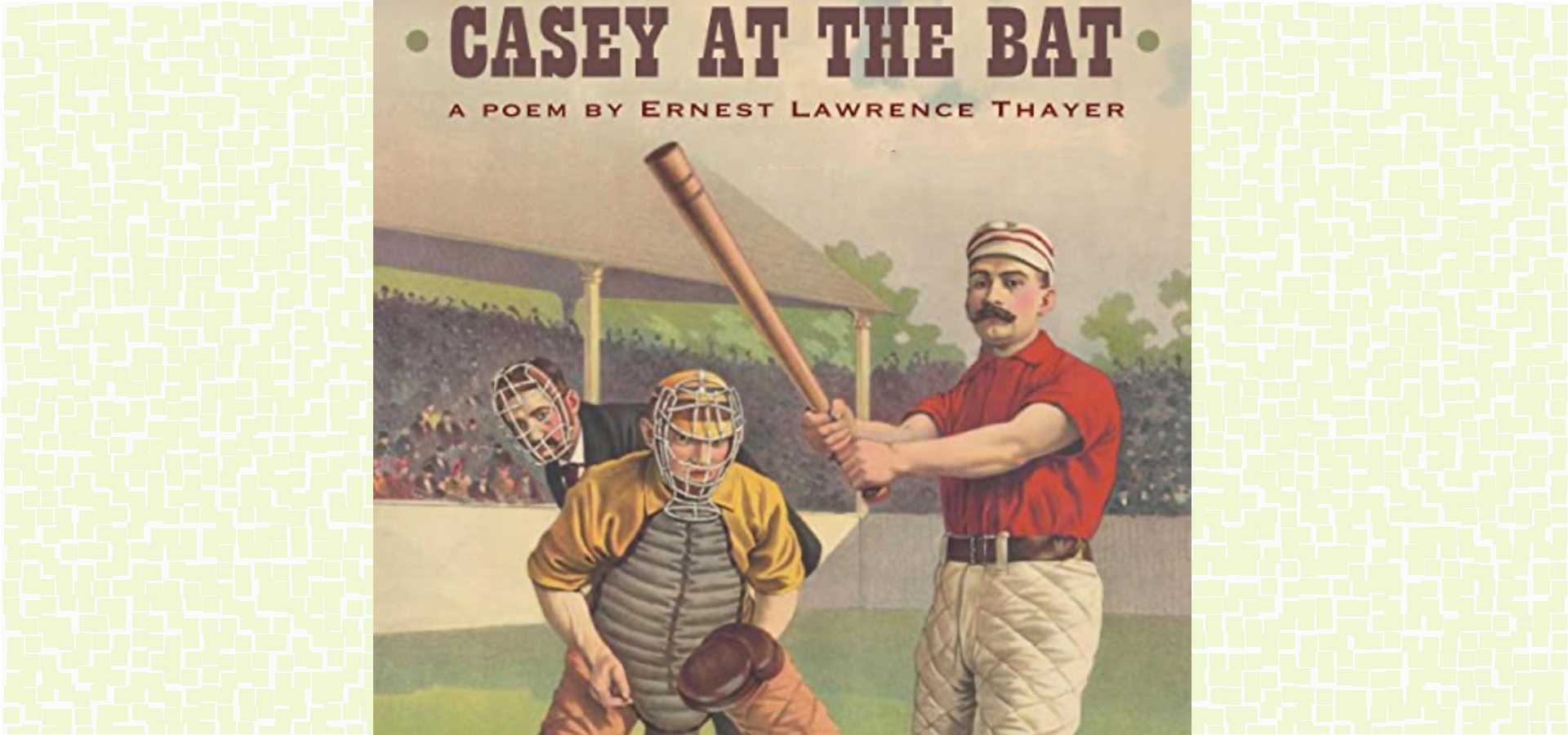
“Casey at the Bat: A Ballad of the Republic, Sung in the Year 1888” is considered the Grand Slam of baseball poetry. Penned by Ernest Lawrence Thayer, it was first published in the San Francisco Daily Examiner on June 3, 1888.
Casey at the Bat
The outlook wasn’t brilliant for the Mudville nine that day;
The score stood four to two with but one inning more to play.
And then when Cooney died at first, and Barrows did the same,
A sickly silence fell upon the patrons of the game.
A straggling few got up to go in deep despair. The rest
Clung to that hope which springs eternal in the human breast;
They thought if only Casey could but get a whack at that—
We’d put up even money now with Casey at the bat.
But Flynn preceded Casey, as did also Jimmy Blake,
And the former was a lulu and the latter was a cake;
So upon that stricken multitude grim melancholy sat,
For there seemed but little chance of Casey’s getting to the bat.
But Flynn let drive a single, to the wonderment of all,
And Blake, the much despised, tore the cover off the ball;
And when the dust had lifted, and men saw what had occurred,
There was Jimmy safe at second and Flynn a-hugging third.
Then from 5,000 throats and more there rose a lusty yell;
It rumbled through the valley, it rattled in the dell;
It knocked upon the mountain and recoiled upon the flat,
For Casey, mighty Casey, was advancing to the bat.
There was ease in Casey’s manner as he stepped into his place;
There was pride in Casey’s bearing and a smile on Casey’s face.
And when, responding to the cheers, he lightly doffed his hat,
No stranger in the crowd could doubt ’twas Casey at the bat.
Ten thousand eyes were on him as he rubbed his hands with dirt;
Five thousand tongues applauded when he wiped them on his shirt.
Then while the writhing pitcher ground the ball into his hip,
Defiance gleamed in Casey’s eye, a sneer curled Casey’s lip.
And now the leather-covered sphere came hurtling through the air,
And Casey stood a-watching it in haughty grandeur there.
Close by the sturdy batsman the ball unheeded sped—
“That ain’t my style,” said Casey. “Strike one,” the umpire said.
From the benches, black with people, there went up a muffled roar,
Like the beating of the storm-waves on a stern and distant shore.
“Kill him! Kill the umpire!” shouted some one on the stand;
And it’s likely they’d have killed him had not Casey raised his hand.
With a smile of Christian charity great Casey’s visage shone;
He stilled the rising tumult; he bade the game go on;
He signaled to the pitcher, and once more the spheroid flew;
But Casey still ignored it, and the umpire said, “Strike two.”
“Fraud!” cried the maddened thousands, and echo answered fraud;
But one scornful look from Casey and the audience was awed.
They saw his face grow stern and cold, they saw his muscles strain,
And they knew that Casey wouldn’t let that ball go by again.
The sneer is gone from Casey’s lip, his teeth are clinched in hate;
He pounds with cruel violence his bat upon the plate.
And now the pitcher holds the ball, and now he lets it go,
And now the air is shattered by the force of Casey’s blow.
Oh, somewhere in this favored land the sun is shining bright;
The band is playing somewhere, and somewhere hearts are light,
And somewhere men are laughing, and somewhere children shout;
But there is no joy in Mudville—mighty Casey has struck out.
Since its inception in 1888, “Casey at the Bat” has served as the inspiration for many dozens of artistic endeavors.
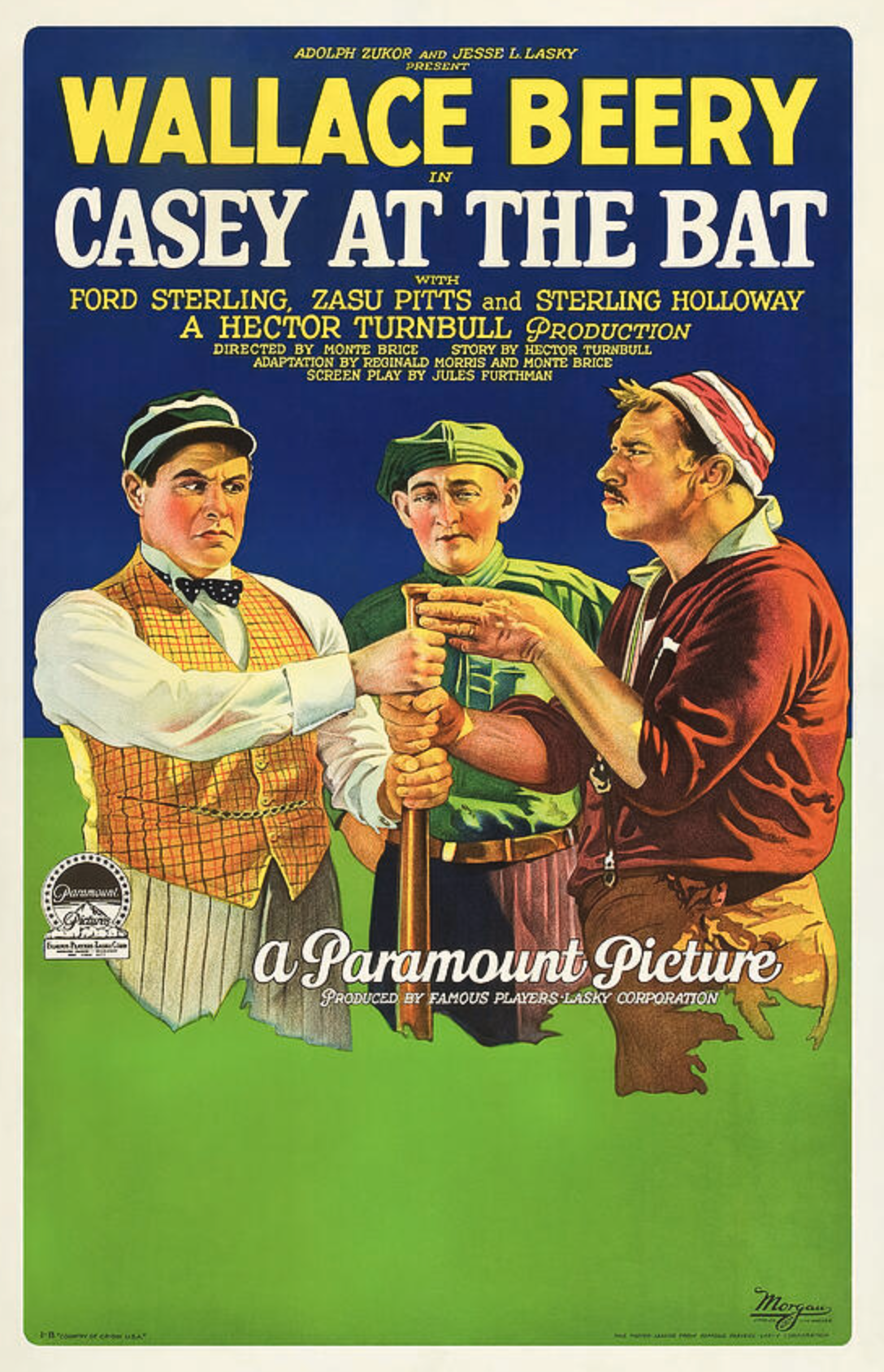
In 1898, the Edison Manufacturing Company released the silent comedy short “Casey at the Bat.” This was followed by at least 3 more silent films of the same name, including a 1927 full-length feature starring Wallace Beery. Disney Productions released an animated version of the story in 1954.
DeWolf Hopper, who claimed to have recited the poem more than 10,000 times, delivered the first stage recitation on August 14, 1888, at New York’s Wallack Theater, in the presence of the Chicago White Stockings and New York Giants.
The poem has inspired countless plays, and was even adapted into a 1953 opera by American composer William Schuman.
In 1973, “Casey At The Bat – an American Folk Tale for Narrator and Orchestra” was recorded by Baseball Hall-of-Famer Johnny Bench and the Cincinnati Symphony Orchestra. It has since been performed more than 800 times by nearly every major and Metropolitan orchestra in the U.S. and Canada.
Joe Walsh’s 1973 song “Rocky Mountain Way” features the lyric, “Bases are loaded and Casey’s at bat, playin’ it play-by-play. Time to change the batter.”
John Fogerty’s 1985 single “Centerfield” includes the line, “Well, I spent some time in the Mudville Nine, watchin’ it from the bench. You know I took some lumps when the Mighty Case struck out.”
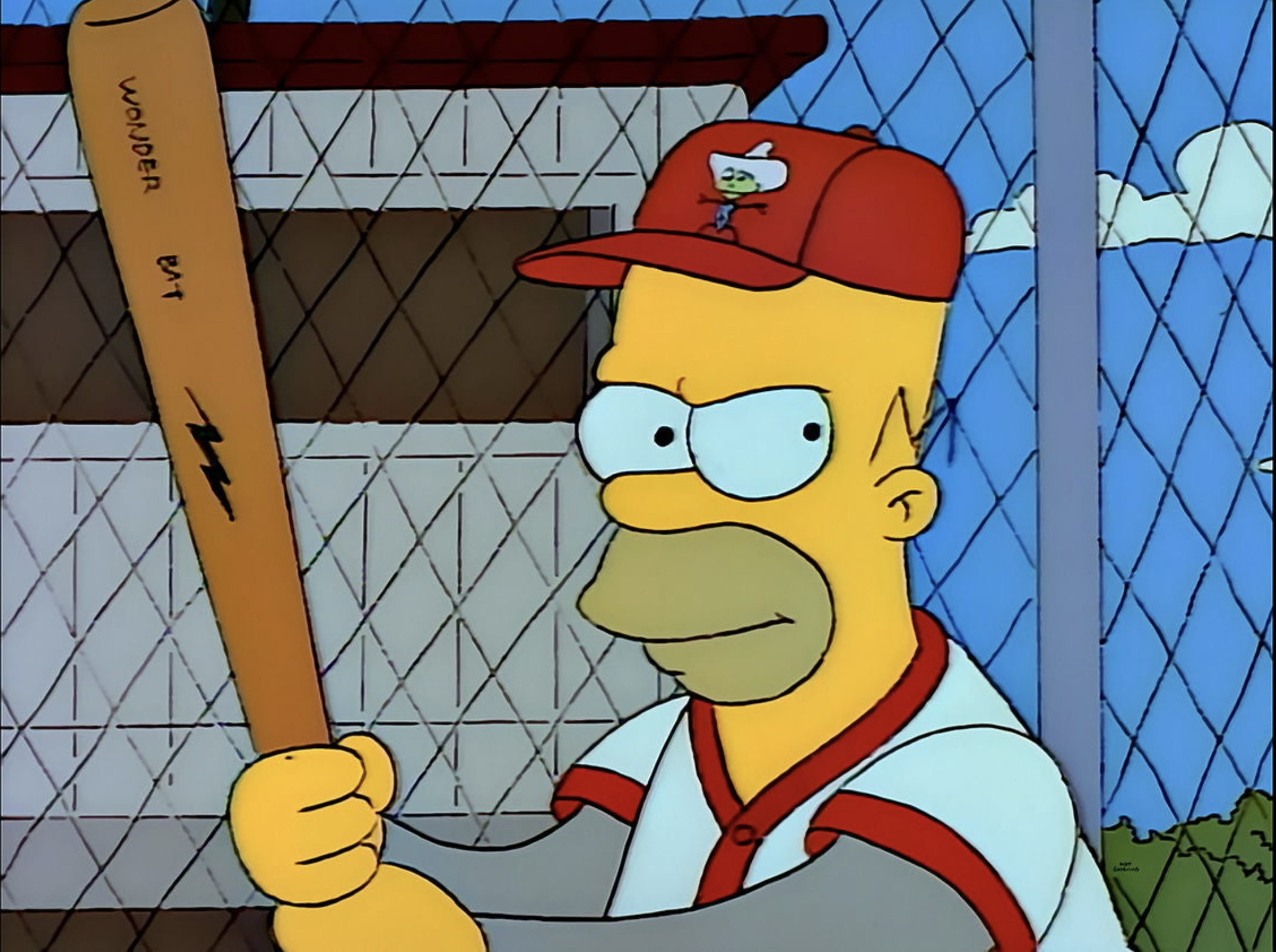
A 1992 episode of “The Simpsons” titled “Homer at the Bat” was inspired by the poem.
In the “Northern Exposure” episode “The Graduate,” Chris Stevens re-enacts the poem while delivering his dissertation for a Master’s degree in Comparative Literature.
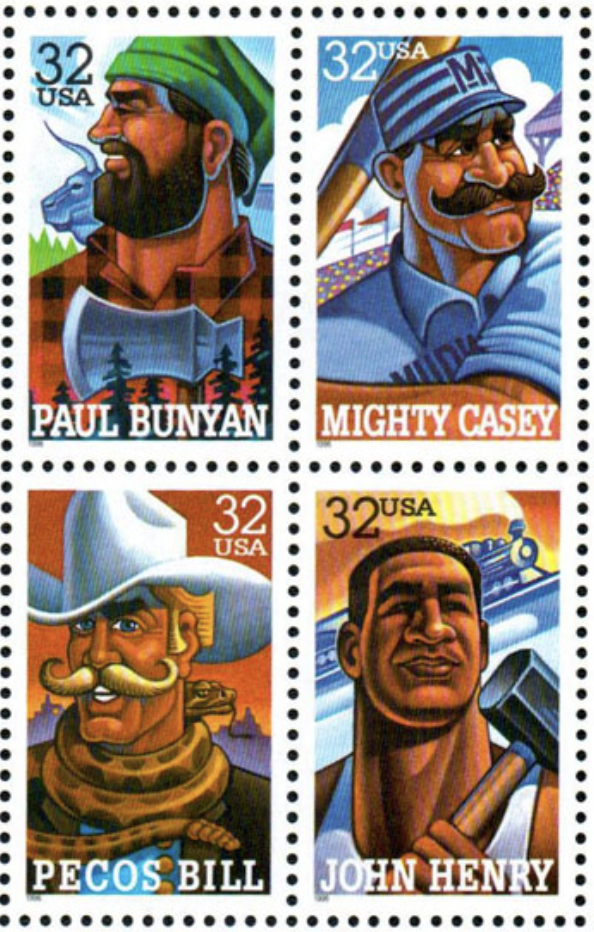
On July 11, 1996, the United States Postal Service issued a commemorative stamp depicting “Mighty Casey.” The stamp was part of a set commemorating American folk heroes.
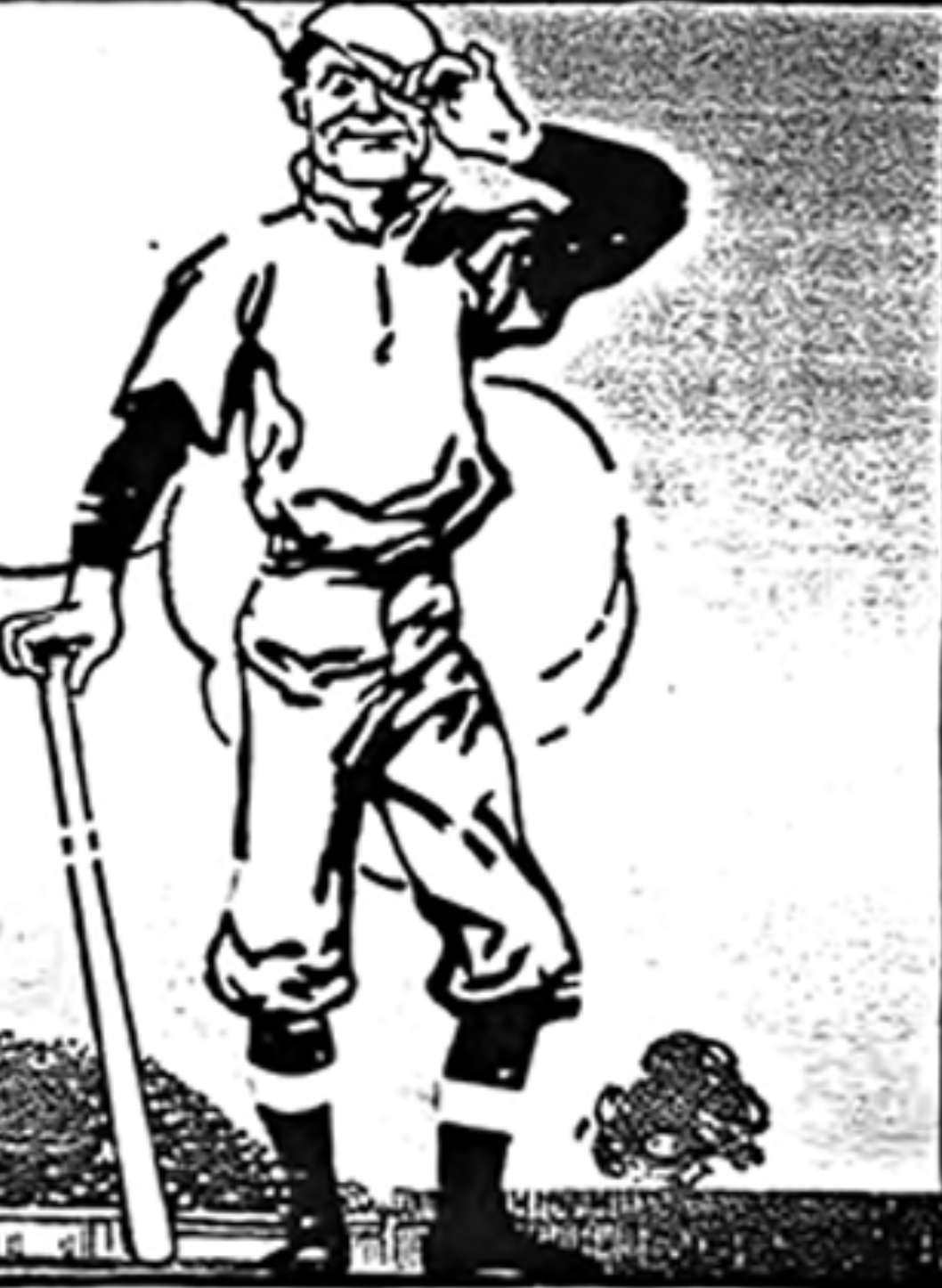
Dan Sayre Groesbeck created this illustration for the first book version of “Casey at the Bat,” published by A.C. McClurg & Company in 1912.
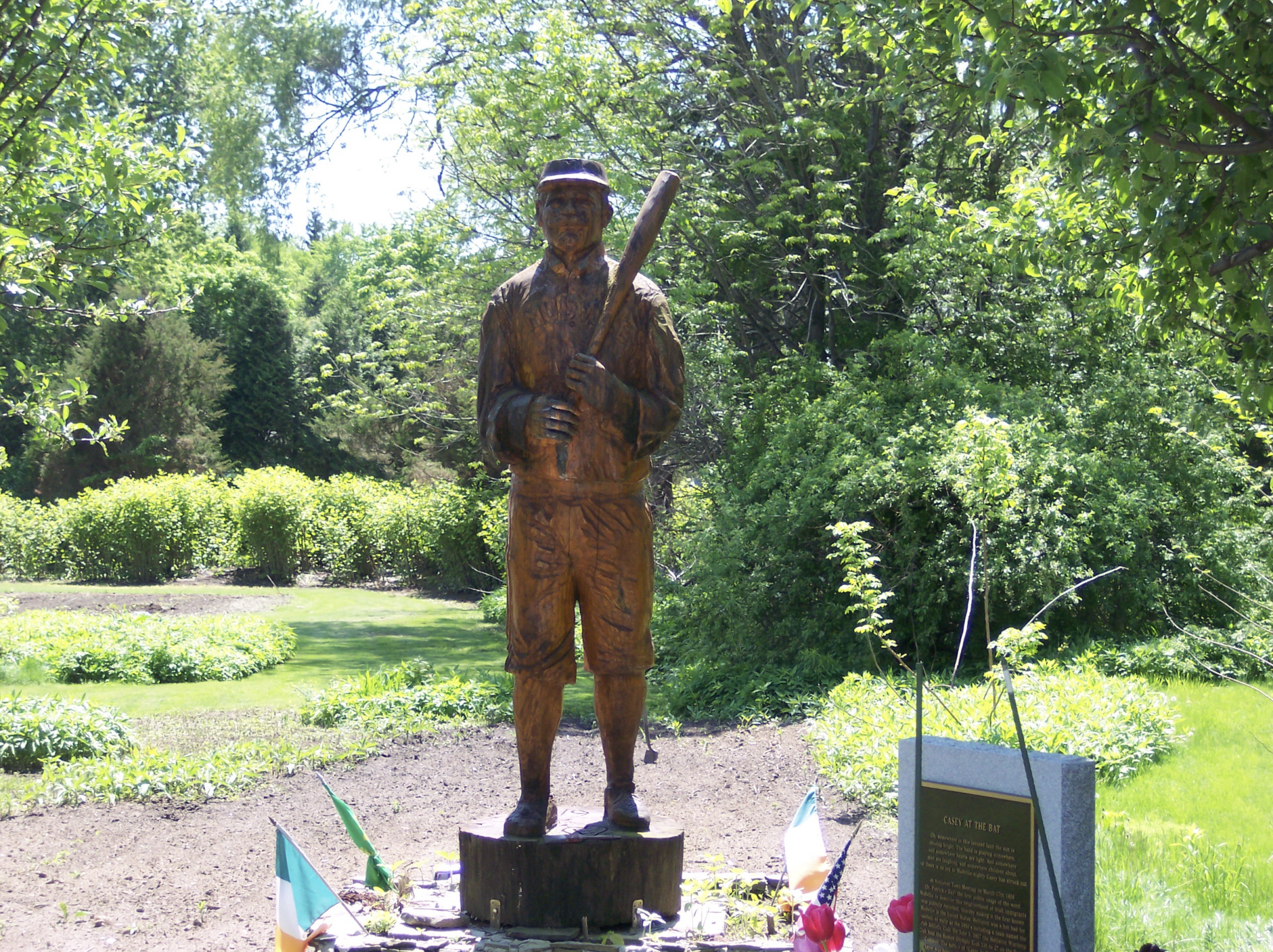
A statue dedicated to the legend of “Casey at the Bat” was erected in Mudville Village, a neighborhood of Holliston, Massachusetts. Residents claim it is the Mudville described in the poem. Ernest Thayer grew up in nearby Worcester, Massachusetts.
© Dana Spiardi, April 7, 2026